




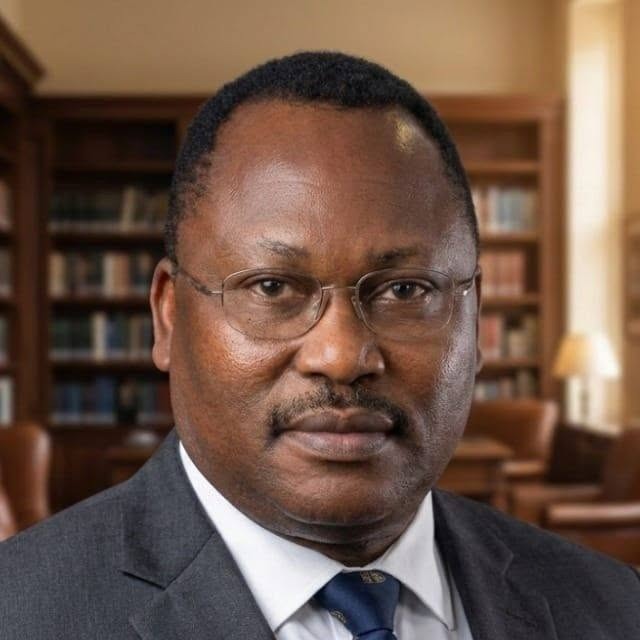
Monday Nasiru Ozoya is a football development leader, sports researcher, safeguarding advocate, and experienced administrator whose career spans more than 35 years across military service, health and social care, organisational management, and grassroots football.
His leadership journey began in the Nigerian Navy, where he served from 1989 to 2004 in accounts, budgeting, and senior administrative support. His service included participation in ECOMOG peacekeeping operations in Liberia and Sierra Leone. These formative experiences strengthened the discipline, accountability and public service values that continue to guide his work.
Following his relocation to the United Kingdom, Monday developed a distinguished career in health and social care. Since 2005, he has supported individuals with complex needs and contributed to staff development as a Positive Behaviour Support trainer. He is also Company Secretary and Training Lead at Diamond Heart Health Care Limited, where his responsibilities include administration, workforce development, regulatory compliance, and organisational governance.
Football, however, has remained central to his life and public service. As an FA-licensed coach and referee, Monday has worked across youth and open-age football in England. He was a committee member, Under-10s and Under-12s Divisional Secretary of the Salford and District Football League, Chairman of Manchester Bulls Football Club, Director and UK Coordinator of African Coaches Connect, and a member of the Board of Trustees of the Nigerian Youth Football Association.
In 2015, he founded the Ozoya Football Foundation to create structured sporting, educational and social development opportunities for children and young people, particularly those from underserved communities. Through the Foundation, he advocates for child protection, trained coaches, sustainable competitions, transparent football administration, and development pathways that place education and welfare alongside sporting performance. He is also the founder and chairman of Aro United Football Club in Edo State, Nigeria.
Monday holds a Master of Science in Sports Business Management, a Bachelor of Arts in Sports Coaching and Development, and a Higher National Diploma in Sports Health, Fitness and Exercise. His professional qualifications include the FIFA Guardians Safeguarding in Sport Platinum Award, Certificate of Achievement in Sport for Sustainable Development: Designing Effective Policies and Programmes, FA coaching and talent identification qualifications, Positive Behaviour Support coaching certification, Club Welfare, Sports massage, sports injury management and emergency first aid training.
He is currently undertaking doctoral research in artificial intelligence and sport at the University of Greater Manchester. His research examines neuro-symbolic reinforcement learning for interpretable tactical adaptation in team sports, with football as the principal application. The study seeks to develop intelligent systems that can support tactical decision-making while producing explanations that coaches and practitioners can understand, evaluate and trust.
Monday represents a distinctive combination of practical football experience, academic knowledge, organisational leadership, and public service. He understands football from the pitch, the committee room, the classroom, and the community. His vision is for a Nigerian football system built on competence, transparency, safeguarding, evidence, and sustainable grassroots development.
For Monday Nasiru Ozoya, football leadership is not about status. It is about responsibility, measurable service and building a system in which talent can develop safely and succeed.Ozoya,in this interview, speaks on his dreams for the development of Nigerian football and how its cankerworm can best be tackled…enjoy it.
1.Nigerian football has struggled with grassroots development, weak leagues, and a declining FIFA ranking. What is your 4-year blueprint to reform the NPFL, NWFL and grassroots football, and how will you fund it without depending on government subvention?
My four-year blueprint is founded on one principle: Nigeria does not lack football talent; it lacks a coordinated system to identify, develop, and sustain that talent.
In my first one hundred days, I will commission and publish an independent assessment of the NFF, the NPFL, the NWFL, youth competitions, coaching, refereeing, facilities, and football finances. We cannot reform what we have refused to measure.
The programme will proceed through four phases.
Year One: Audit, standards, and institutional repair
We will establish minimum governance, licensing, safeguarding and financial requirements for every professional league and participating club. Fixtures must be published before the season, match venues inspected, and competition rules enforced consistently. The NFF will also begin a national registration programme covering clubs, academies, coaches, referees, and players.
Year Two: Competition and development
We will introduce well-structured national and regional competitions from Under 10 to Under 20 levels, linked to schools, academies, community clubs, and state football associations. Each state FA will receive development support against measurable targets, including active youth leagues, female participation, coach education, and safeguarding compliance.
Year Three: Commercial growth
The NPFL and NWFL require professional commercial units responsible for sponsorship, media rights, digital content, ticketing, merchandising, and supporter engagement. League income must be negotiated transparently and distributed according to published criteria.
Year Four: Consolidation and independent evaluation
An external review will assess progress against published indicators, including match attendance, broadcast reach, club revenues, player welfare, youth participation, women’s participation, and national team performance.
The government has a legitimate responsibility to support national representation and public sporting infrastructure, but government subvention cannot remain our principal business model. Understanding the football business model is key. We will diversify revenue through central sponsorship agreements, broadcast and streaming rights, digital memberships, licensing, merchandising, diaspora partnerships, development grants, and commercial use of NFF assets.
Every commercial agreement will be subject to due diligence and published reporting. My objective is to ensure that, by the end of four years, a growing proportion of the NFF’s operational income is generated commercially rather than received through emergency government intervention.
This will not be another document placed on a shelf. Every commitment will have a target, a responsible officer, a timetable, and a published annual result.
2. One of the major criticisms of previous NFF boards has been the lack of transparency in finances and player or agent dealings. What specific policies will you introduce to ensure accountability?
Transparency must become an operating system, not a campaign slogan.
Under my leadership, the NFF will publish annual audited accounts, approved budgets, major expenditure categories, sponsorship income, and the financial distribution made to leagues, state associations, and national teams. These reports will be accessible through a public NFF transparency portal.
I will introduce five immediate safeguards.
First, an independent Audit, Risk and Compliance Committee will be chaired by a suitably qualified professional who is not a serving member of the NFF Executive Committee.
Secondly,procurement above a published financial threshold will require competitive bidding, documented evaluation, and disclosure of the successful contractor.
Thirdly,every board member and senior employee will submit annual declarations covering interests, gifts, related parties and relationships with clubs, academies, agents, or sports marketing companies.
Fourth, the NFF will adopt a protected whistleblowing system managed independently, with clear procedures for investigating allegations and protecting those who report misconduct in good faith.
Fifth, board members and NFF officials will be prohibited from influencing player selection, recommending players for commercial purposes, or participating in agent-related transactions. Selection responsibility will rest with the appointed technical team. Squad decisions will be documented using agreed technical criteria.
We will also establish a register of intermediaries and require disclosure of any agent involvement in transactions connected to national-team players or NFF competitions.
I will publish my own declaration of interests and expect every member of my administration to do the same. Anyone who refuses to be transparent should not be responsible for Nigerian football.
3. Nigeria has experienced repeated problems with hiring and dismissing coaches, unpaid salaries, and interference. What will be your policy on foreign and indigenous coaches?
The question should not be whether a coach is foreign or Nigerian. The first question should be whether that coach is competent, aligned with our football philosophy, capable of developing players, and accountable for results.
All senior national-team coaching appointments will follow an open and documented recruitment process. A technical panel will assess candidates against published criteria covering qualifications, international experience, tactical competence, player development, performance analysis, communication and understanding of Nigerian football.
Where candidates demonstrate comparable competence, a qualified Nigerian coach should receive serious consideration. However, nationality alone must neither guarantee nor prevent an appointment.
Every coach will receive a written contract containing clear objectives, performance indicators, reporting arrangements, termination provisions, and payment schedules. Before any appointment is announced, the NFF must demonstrate that it can finance the entire contractual commitment.
Coaches and players should never have to protest before receiving money they have earned. Salaries, bonuses, and camp allowances will be incorporated into an annual protected national-team budget, supported by a payment calendar and financial reserves.
The Executive Committee will set policy and approve resources. It will not select players, dictate formations, or impose individuals on a coach. The Technical Department will monitor performance, but coaching decisions will remain with the technical team.
Dismissal will not be based on social-media pressure or personal disagreement. It will follow an evidence-based performance review and the contract terms. Stability does not mean tolerating failure. It means creating clear expectations and judging performance fairly.
I will also establish a Nigerian Coaches Development Pathway. Assistant coaches, analysts, and youth-team coaches will work across national teams, receive continuing education, and build the experience required to lead at the highest level.
4.What is your plan to commercialise the NWFL, invest in women’s football, support the youth, and beach soccer national teams?
The Super Falcons are 10-time African champions. Their record represents one of Nigeria’s greatest sporting achievements, but success on the field has not been matched by the quality of administration, investment, and commercial development around the team.
My administration will introduce a dedicated women’s football strategy covering the Super Falcons, youth national teams, the NWFL, grassroots participation, coaching, refereeing, safeguarding, and commercial development.
The NWFL will receive its own commercial and media programme. We will develop consistent scheduling, minimum club licensing standards, digital broadcasting, match highlights, player profiles, and sponsorship packages designed specifically for the women’s game. Sponsors must be offered measurable value, not approached only when a competition is about to begin.
Women representing Nigeria will receive professional travel, accommodation, medical care, insurance, and performance support. Payment terms will be agreed before tournaments, and the principle of equitable treatment will guide bonuses, facilities, and welfare.
Our Under 17 and Under 20 teams will no longer operate only as qualification projects. They will form part of a continuous national development pathway connected to schools, academies, clubs, and senior national teams. Player records, development plans, and age-verification documentation will be maintained through a central digital system.
Beach Soccer, futsal, and disability football will be restored as part of a broader football development portfolio. Each programme will have an annual calendar, technical leadership, and measurable participation targets.
Investment must follow a system, not the visibility of one team. No Nigerian national team should disappear for several years and then be assembled hurriedly before a qualifier.
5.Nigeria missed the 2022 and 2026 World Cups. How will you rebuild Nigeria’s international standing and ensure qualification for 2030 while returning the country to international hosting?
Missing two consecutive FIFA World Cups is not merely a football result. It indicates failures in planning, preparation, administration, and accountability. Nigeria’s defeat to DR Congo in the African play-off ended its 2026 qualification campaign and confirmed a second consecutive absence from the tournament. That must never become normal.
Rebuilding our international reputation will begin at home. FIFA, CAF, and serious commercial partners will respect an NFF that submits reports on time, honours contracts, protects players, maintains credible accounts, and delivers competitions on schedule.
Within the first year, we will create an International Relations and Tournament Directorate responsible for FIFA and CAF engagement, hosting requirements, development programmes, and Nigeria’s representation on international football committees.
Qualification for 2030 will be managed as a four-year performance programme rather than an emergency campaign.
The programme will include:
1. A national playing philosophy connecting youth and senior teams.
2. Early appointment and contractual stability for the technical leadership.
3. Continuous scouting of home-based and overseas Nigerian players.
4. Integrated performance analysis, sports science, medical care, and player-load monitoring.
5. Competitive international matches planned against teams with relevant tactical profiles.
6. Proper pitch, travel, and camp arrangements confirmed well in advance.
7. Quarterly technical reviews against qualification and performance indicators.
No NFF president can honestly guarantee qualification because matches must still be won on the field. What I can guarantee is that preparation will no longer be undermined by administrative disorder, unpaid obligations, or last-minute decisions.
Nigeria must also become a credible tournament host again. We will work with federal and state governments to identify a limited number of stadiums and training facilities that meet CAF and FIFA standards. Rather than announcing unrealistic hosting ambitions, we will begin with youth, women’s, beach soccer, futsal and CAF club events, demonstrate delivery capacity, and then pursue larger competitions.
My commitment is clear: by the end of four years, Nigerian football must be more transparent, more commercially strong, more technically coherent, and more institutionally respected than it was when we assumed office.
This campaign is not simply about changing the NFF President’s name. It is about changing the standards by which Nigerian football is governed.
